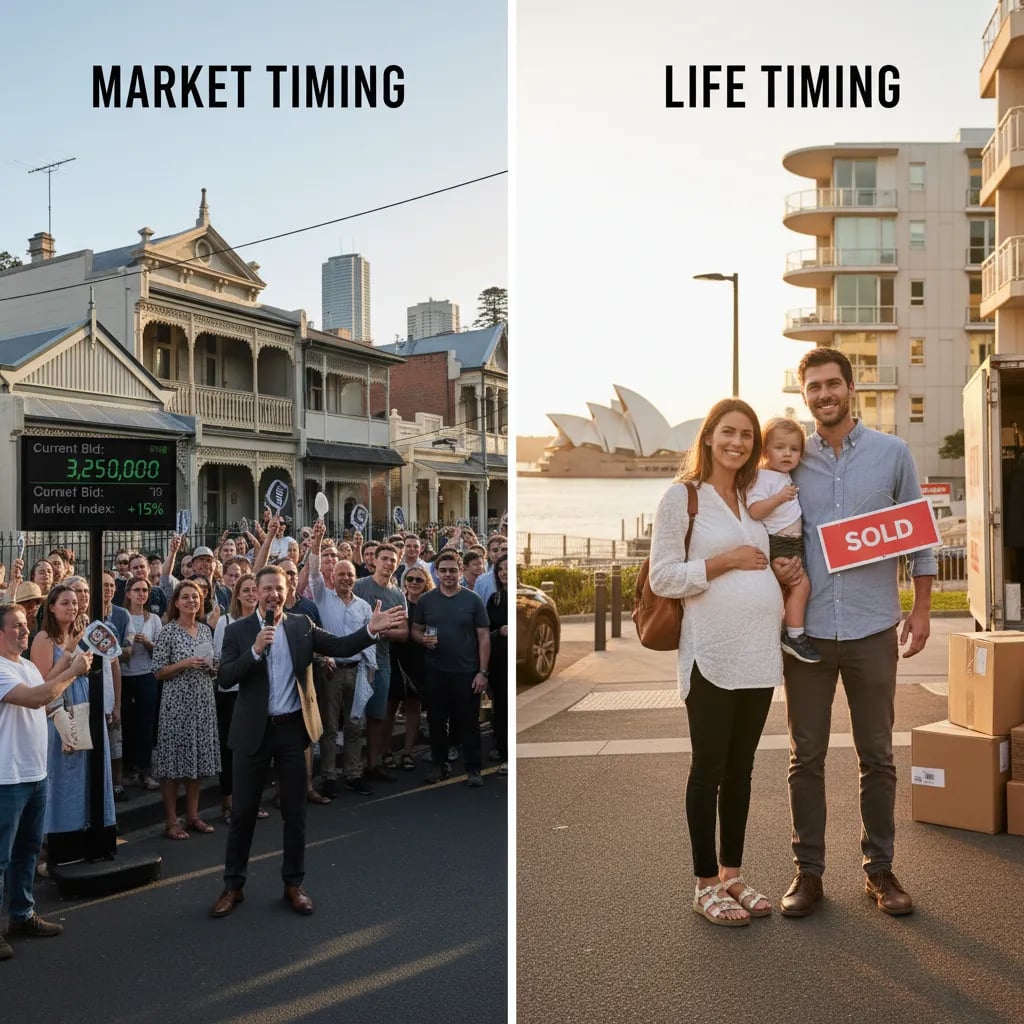



Imagine watching the Sydney property market headlines flip-flop every season, while your personal life keeps moving at its own steady pace. Jane, a homeowner from the Inner West, once tried to time the market perfectly but realised that life events – like her kids finishing school and new job opportunities – mattered far more in her selling success than any trend or forecast.
The Myth of Market Timing in Sydney’s Property Scene
For many Sydney homeowners, the idea of perfectly timing the market is almost irresistible. The headlines shout about “booms” and “busts,” and coffee shop conversations in the Inner West often circle back to whether now is the “right time” to sell. But how much does market timing in Sydney really matter, and what does behavioural science say about the emotional rollercoaster it creates?
Common Perceptions: The Lure of Market Timing
It’s easy to see why so many sellers believe in market timing. The property market cycles in Sydney are often painted as predictable waves—if you can just catch the next upswing, you’ll walk away with a windfall. This perception is especially strong in the Inner West, where stories of neighbours who “sold at the peak” fuel the belief that timing is everything.
Why Market Cycles Can Feel Unpredictable and Misleading
In reality, property market cycles are shaped by a tangled web of factors: interest rates, government policy, global events, and even local school catchments. These cycles are often short-lived and can turn quickly. What looks like a rising market one month can flatten the next, leaving sellers chasing headlines rather than making steady decisions. As John Smith, Property Analyst, puts it:
Market timing is often an exercise in guesswork rather than strategy.
Inner West Property Market: Contrasting Seller Experiences
Take the Inner West property market as an example. Some sellers who waited for the “perfect” moment ended up missing out when conditions shifted unexpectedly. Others, who sold based on life needs—like upsizing for a growing family or relocating for work—often reported greater satisfaction, regardless of the exact market cycle. These real-life stories highlight that outcomes are rarely dictated by timing alone.
Media Hype vs. Reality: The Power of Headlines
Media coverage tends to sensationalise every market movement, amplifying both upswings and downturns. This can distort seller expectations, making it feel like every decision is high-stakes. In practice, most Inner West sales don’t match the dramatic headlines. The reality is usually far more nuanced, with steady demand for well-located homes even during quieter periods.
Behavioural Science: The Pitfalls of Emotional Market Timing
Behavioural research shows that market news can trigger strong emotional reactions—fear during downturns, greed during booms. These emotions often lead to poor timing decisions, such as panic selling or holding out too long. Sellers who anchor their decisions to personal circumstances, rather than market noise, tend to experience more emotional steadiness and better long-term outcomes.
Real-Life Limits of Market Forecasting
Forecasting the Sydney property market is notoriously unreliable. Even seasoned analysts admit that predictions are often off the mark. In the Inner West, some homeowners who waited for prices to peak found themselves caught out by sudden changes, while others who acted on life events—like a new job or a growing family—found the process less stressful and more rewarding.
FAQs: Does Market Timing Really Matter?
Does market timing in Sydney actually work?
Not reliably. Property market cycles are influenced by many unpredictable factors, making precise timing more about luck than skill.How should I assess my readiness to sell?
Focus on your personal circumstances—such as family needs, financial goals, and lifestyle changes—rather than waiting for the “perfect” market moment.What if I’m worried about missing out?
Remember, most successful sellers in the Inner West act when it suits their life, not just the market. Emotional steadiness often leads to better decisions and outcomes.
Life Timing: The Underestimated Driving Force Behind Selling Decisions
When it comes to selling property in Sydney, especially across the Inner West, the conversation often starts with market cycles and price trends. But for many homeowners, the real catalyst isn’t the market—it’s life itself. Life timing decisions are quietly shaping the property landscape, offering a more grounded, emotionally steady path to selling than chasing headlines ever could.
How Personal Milestones and Family Needs Shape Selling Decisions
For most Sydney homeowners, the decision to sell is rarely triggered by a perfect market forecast. Instead, it’s life’s milestones that prompt action: a growing family needing more space, a career move to another city, or the desire to downsize after children leave home. These personal events provide clear motivation and direction, making the decision process more straightforward and less stressful.
Career shifts: A new job in Melbourne or a remote work opportunity can mean it’s time to move on.
Family growth: Expecting a new baby or blending families often means searching for a bigger backyard or more bedrooms.
Downsizing: Empty nesters in the Inner West frequently sell the family home to embrace a simpler lifestyle.
Inner West Examples: Selling Due to Life Changes
Take the Smiths from Marrickville, who sold their terrace after their twins arrived, needing more space and a quieter street. Or consider the Tran family in Newtown, who decided to sell when both parents landed jobs in the CBD, seeking a shorter commute and better work-life balance. These stories are echoed across the Inner West, where life timing decisions often outweigh market speculation.
Emotional Steadiness: The Advantage of Life-Driven Selling
One of the greatest benefits of aligning your sale with life events is emotional steadiness selling. When the decision is rooted in personal readiness, sellers report feeling more confident and less anxious about the process. There’s less second-guessing and regret, and more satisfaction with the outcome. As real estate coach Emma Taylor puts it:
Aligning selling decisions with your life story creates peace of mind.
The Freedom of Focusing on Life Timing Over Market Guesstimates
Trying to predict the market can be exhausting and often leads to missed opportunities or unnecessary stress. By focusing on life timing decisions, homeowners gain the freedom to move forward when it truly suits them, rather than waiting for the “perfect” market moment that may never arrive. This approach often leads to better emotional and financial outcomes, as decisions are made with clarity and purpose.
Synchronising Life Timing with Financial Planning and Wellbeing
Life-driven selling decisions can also align more naturally with financial planning and overall wellbeing. For example, selling when you’re ready to retire or when your mortgage is manageable can ease the transition and support long-term goals. This synchronisation helps maintain emotional steadiness and financial health, two key ingredients for a positive selling experience.
Common Signs Indicating Personal Readiness to Sell
Feeling emotionally detached from the property
Clear financial or lifestyle goals prompting a move
Family or career changes requiring a different living arrangement
Desire for a new environment or community
FAQs: Does Market Timing Really Matter? How Do I Assess My Readiness?
Does market timing really matter? While it can influence price, most Sydney homeowners find better outcomes when selling aligns with their life needs rather than market predictions.
How do I assess personal readiness selling? Reflect on your emotional attachment, financial stability, and life goals. If the move feels right for your current situation, it’s likely the right time.
Behavioural Insights: Why Emotions Matter More Than Market Trends
When it comes to real estate selling decisions, especially in Sydney’s ever-shifting market, behavioural insights property experts have long noted that emotions often play a bigger role than most sellers realise. While market trends and headlines can be tempting to chase, the science behind human behaviour suggests that emotional steadiness selling is the real key to a successful outcome.
Behavioural Science and Property Decisions
Behavioural psychology shows that people are prone to making impulsive decisions when faced with uncertainty or pressure. In the context of property, this means that sellers who react emotionally to market news—such as sudden price drops or media hype—are more likely to make rushed choices they later regret. As Michael Lee, Behavioural Economist, puts it:
Successful selling often hinges less on market timing and more on emotional control.
Research supports this, revealing that controlled emotional responses correlate with more satisfying sale outcomes, regardless of whether the market is peaking or dipping.
Market Headlines vs. Personal Readiness
It’s easy to get swept up in the latest Sydney property cycle reports. However, overreacting to these headlines can cause unnecessary stress and lead to poor timing. Sellers in the Inner West, for example, often find themselves debating whether to wait for the “perfect” market moment. Yet, those who focus on their own life timing—such as upsizing for a growing family or relocating for work—tend to report better emotional and financial outcomes.
Inner West Stories: Calm Outperforms Chasing
Consider two homeowners in Marrickville. One delayed selling for months, anxiously watching auction results and media commentary, only to list during a market lull and feel disappointed. The other sold when their family’s needs changed, ignoring short-term headlines. They approached the process with emotional steadiness, made clear decisions, and ultimately felt more satisfied—regardless of the final sale price.
These stories are echoed across the Inner West. Sellers who maintain emotional balance and focus on their own circumstances consistently outperform those who try to “beat the market.”
Cultivating Emotional Balance When Selling
So, how can sellers train themselves to focus on what they control and avoid being swayed by market noise? Here are some practical suggestions:
Clarify your goals: Know why you’re selling—whether it’s for lifestyle, family, or financial reasons.
Limit media exposure: Avoid obsessively tracking property news, which can fuel anxiety.
Seek professional guidance: A trusted agent can provide perspective and keep you grounded.
Practice patience: Give yourself time to make decisions, rather than reacting to every market shift.
Focus on your timeline: Remember, market cycles change, but life doesn’t wait.
FAQs: Emotional Steadiness and Market Timing
Does market timing really matter?
While market conditions can influence price, behavioural insights property research shows that emotional steadiness selling and personal readiness often have a greater impact on satisfaction and long-term outcomes.How do I know if I’m ready to sell?
Assess your own life circumstances, motivations, and emotional readiness. If your reasons for selling are clear and you feel confident, you’re likely in a strong position—regardless of what the market is doing.
Ultimately, real estate selling decisions in Sydney’s Inner West are best made with a calm mind and a focus on what truly matters: your own life and emotional wellbeing.

The Inner West Experience: Real Stories from Sydney Homeowners
When it comes to selling in the Inner West property market, Sydney homeowners often find themselves weighing up two powerful forces: the lure of market timing and the reality of life timing. Real stories from Inner West sellers reveal that while market cycles come and go, life’s major events—like growing families, job changes, or health needs—rarely wait for the “perfect” market moment. These experiences highlight why personal readiness selling often leads to better emotional and practical outcomes.
Balancing Market Hopes and Life’s Realities
Many Sydney homeowners selling in the Inner West start out with a market-driven mindset. They watch auction clearance rates, read headlines, and try to pick the peak. But as Sarah Johnson, an Inner West homeowner, shared:
I tried waiting for the 'perfect market' but found peace only when I put family first.
Sarah’s story is echoed by many. She delayed her sale for months, hoping for a price jump that never came. When her family’s needs changed, she chose to move regardless of the market—and found relief in finally making the decision.
When Life Events Override Market Plans
It’s common for unexpected life events to upend even the best-laid market timing strategies. One couple in Marrickville planned to sell when prices peaked, but a sudden job offer interstate forced their hand. They sold quickly, accepting a fair price rather than risking the opportunity. Looking back, they felt the emotional steadiness of acting on life’s timeline outweighed any potential financial gain from waiting.
Emotional Relief from Personal Readiness Selling
Across the Inner West, homeowners report a sense of relief and satisfaction when their selling decision aligns with personal readiness. The stress of monitoring market trends, second-guessing timing, and fearing missed opportunities can take a toll. Instead, those who sell when life demands it—whether upsizing, downsizing, or relocating—often describe feeling lighter and more content, regardless of the final sale price.
Regrets from Chasing the Market
There are also stories of regret from those who tried to outsmart the market. A Petersham seller waited through two spring cycles, hoping for a boom. By the time they sold, the market had softened, and they felt exhausted by the process. “I wish I’d listened to my gut and moved on when I was ready,” they reflected.
Positive Outcomes from Life-Driven Decisions
On the flip side, sellers who prioritised life timing often found unexpected positives. A young family in Leichhardt sold to move closer to grandparents, accepting a slightly lower price than hoped. The support and improved lifestyle far outweighed the small financial compromise. Their story is a reminder that the best timing is often personal, not market-based.
Diversity of Experiences: No One-Size-Fits-All
The Inner West property market is a microcosm of broader Sydney trends, showing that every selling journey is unique. Some homeowners benefit from market-driven decisions, but most find that life’s unpredictability shapes the real timeline. These varied experiences reveal that there’s no universal formula—only what feels right for each individual or family.
FAQs: Market Timing vs Life Timing
Does market timing really matter? It can influence price, but most Sydney homeowners selling in the Inner West find that life events and personal readiness are stronger drivers of satisfaction.
How do I know if I’m personally ready to sell? Consider your current needs, emotional state, and future plans. If selling brings relief or excitement rather than stress, you’re likely ready.
FAQ: Addressing Common Concerns About Market and Life Timing
Does Market Timing Really Matter for Sydney Sellers?
Many Sydney homeowners wonder if waiting for the “perfect” market is the secret to a successful sale. While market cycles can influence sale prices, behavioural insights show that home selling timing based solely on market predictions rarely guarantees better outcomes. The Sydney property market, especially in the Inner West, is known for its ups and downs, but life events—like growing families, job changes, or downsizing—often dictate when people need to move. As real estate advisor Laura Greene puts it:
“Understanding your personal readiness outweighs chasing market trends.”
Rather than obsessing over forecasts, focus on your own needs and circumstances. Market timing can help, but it shouldn’t be the only factor guiding your decision.
How Can You Tell If You’re Personally Ready to Sell?
Assessing personal readiness selling is more than just checking your finances. Ask yourself:
Are you emotionally prepared to move on from your current home?
Do you have a clear reason for selling (e.g., lifestyle change, financial need, family growth)?
Have you considered the practicalities—like where you’ll live next and moving costs?
Are you comfortable with the process and potential outcomes?
Homeowners in the Inner West often find that clarity around these questions leads to more confident, less stressful selling experiences. Remember, managing emotions and expectations is just as important as financial planning.
What If Market Conditions Seem Unfavourable?
It’s natural to worry about selling in a “down” market. However, Sydney’s real estate history shows that life-driven sales—such as those prompted by a new job or family needs—often result in positive outcomes, regardless of the cycle. If you’re selling and buying in the same market, price shifts often balance out. The key is to focus on your life goals and not let short-term market dips dictate your decisions.
How to Balance Emotional Feelings with Financial Objectives
Making real estate selling decisions can stir up strong emotions. To stay steady:
Set clear, realistic goals for your sale.
Talk openly with family members about expectations and concerns.
Work with a trusted agent who understands your personal situation, not just the market.
Emotional steadiness leads to better decision-making and helps you avoid regrets down the track.
Tips for Avoiding Media Hype Influence
Media headlines often focus on dramatic market swings, which can create unnecessary anxiety. To keep perspective:
Rely on local data and advice, not national headlines.
Remember that every suburb and street in Sydney has its own micro-market.
Focus on your own timeline and needs, not what’s trending in the news.
Advice on Seeking Professional Guidance Aligned with Life Goals
Choosing the right support is crucial. Look for real estate professionals who:
Prioritise your life circumstances over market speculation.
Offer honest, practical advice tailored to your situation.
Help you weigh both emotional and financial factors.
With the right guidance, you can make selling decisions that feel right for your life—regardless of what the market is doing.
Wild Card: Imagining a Sydney Sale Driven Purely by Life Events
Picture this: a Sydney homeowner in the Inner West, let’s call her Lisa, faces a major life change. She’s just landed her dream job in Melbourne, starting in eight weeks. The property market cycle is in a slump, with headlines warning of falling prices and buyers holding back. But for Lisa, the decision to sell isn’t about chasing the market’s highs or lows—it’s about her life, her family, and what matters most right now.
Ignoring Market Timing: Lisa’s Story
Lisa’s approach is the ultimate wild card. She chooses to sell her Ashfield terrace purely because her life demands it, not because the market is peaking. She doesn’t consult property forecasts or fret over auction clearance rates. Instead, her focus is on getting her family settled in Melbourne before the school term starts. This life timing decision means she lists her home, even as friends and neighbours urge her to “wait for the market to bounce back.”
Life Events as the True Driver
For many Sydney homeowners, life events like a new job, a growing family, or health concerns are the real triggers for selling. These moments rarely line up neatly with the ideal market timing Sydney experts talk about. Lisa’s story is a familiar one in the Inner West, where diverse lifestyles and changing needs often trump market predictions.
Job relocation: Immediate need to move, regardless of market cycle.
Family expansion: Outgrowing the current space, prioritising comfort over market gains.
Health or ageing: Downsizing for accessibility, not for profit maximisation.
Emotional Steadiness and Reduced Stress
By focusing on life timing decisions, Lisa sidesteps the anxiety that comes with trying to “pick the peak.” She avoids the emotional rollercoaster of watching property values fluctuate and the regret that can follow a mistimed sale. Behavioural insights show that sellers like Lisa often report higher satisfaction and less stress, even if they don’t achieve the absolute top price. The certainty of moving forward with life outweighs the uncertainty of market cycles.
Potential Challenges of Ignoring Property Market Cycles
Of course, there are trade-offs. By ignoring market timing Sydney trends, Lisa might miss out on a higher sale price. There’s a financial risk—her property could fetch less than it might have in a booming market. But for many, the emotional benefits—peace of mind, family stability, and reduced anxiety—are worth more than the potential extra dollars.
Market Timing vs. Life Timing: A Parallel Comparison
Market-Driven Seller | Life-Driven Seller |
|---|---|
Waits for peak prices | Sells when life demands |
FAQs: Does Market Timing Really Matter?
Should I wait for the “right” market? Only if your life allows. For most, life events dictate timing more than market cycles.
How do I know if I’m ready? Assess your personal needs, family situation, and emotional readiness—these often matter more than property forecasts.
In Sydney’s ever-changing property market, life-driven decisions can lead to greater satisfaction and less stress, even if it means letting go of the perfect market moment.
Prioritising Life Timing for a Smoother Sydney Sale
When it comes to selling property in Sydney, the debate between market timing and life timing decisions is ongoing. Yet, as we’ve explored, the experiences of Sydney homeowners selling—especially across the Inner West—show that aligning your sale with your own life circumstances often leads to better outcomes, both practically and emotionally. While market cycles will always ebb and flow, life doesn’t wait for the perfect headline or the next property boom. Instead, it’s the personal milestones, family needs, and lifestyle changes that truly shape when the time is right to move on.
Behavioural insights support this approach. Research consistently finds that homeowners who base their selling decisions on life timing, rather than chasing the market, report lower stress and greater satisfaction. This is because life-driven sales allow for emotional steadiness selling—a calm, considered mindset that’s essential when navigating one of life’s biggest financial decisions. In contrast, those who try to outsmart the market often find themselves caught in a cycle of second-guessing, anxiety, and missed opportunities, as market predictions rarely play out exactly as expected.
Take, for example, the many families in Sydney’s Inner West who have chosen to sell because of a new job, a growing family, or the desire to downsize. Their stories show that when the decision to sell is anchored in real life—rather than market speculation—the process feels more manageable and the outcomes more rewarding. These sellers tend to approach negotiations with clarity and confidence, unburdened by the pressure of timing the market’s peaks and troughs.
This isn’t to say that market conditions are irrelevant. Of course, a strong market can add value, and a slow one may require patience. But as property strategist David Harris wisely puts it:
“The best time to sell is when your life says it’s right, not when the headlines shout.”
Embracing this perspective means accepting that unpredictability is part of the journey. Rather than waiting for the stars to align in the market, Sydney homeowners are encouraged to focus on their own readiness. Ask yourself: Is this move right for my family? Am I emotionally and financially prepared for what comes next? These questions matter far more than trying to forecast the next market surge.
For those feeling overwhelmed by market noise, remember that emotional steadiness is your greatest asset. Selling a home is as much about mindset as it is about money. By prioritising your own life timing decisions, you give yourself permission to move forward with confidence, regardless of what the market is doing. This approach not only reduces stress but also increases your satisfaction with the sale, as you know the decision was made for the right reasons.
In summary, while market timing will always be a talking point in Sydney’s property circles, it’s clear that life timing offers a smoother, more satisfying path for most sellers. Reflect on your own circumstances, trust your instincts, and don’t let headlines dictate your next move. By embracing thoughtful, life-aligned selling strategies, you’ll not only achieve a successful sale—you’ll do so with peace of mind and a sense of control over your future.